Mental Model
You’ve got a linear system (that given an input signal, spits out an output one), but u don’t have an explicit formula to compute the output from the input, the system is like a black box to u. How do u then get an explicit input/output formula?
The output is the only thing that can help u observe how the system works.
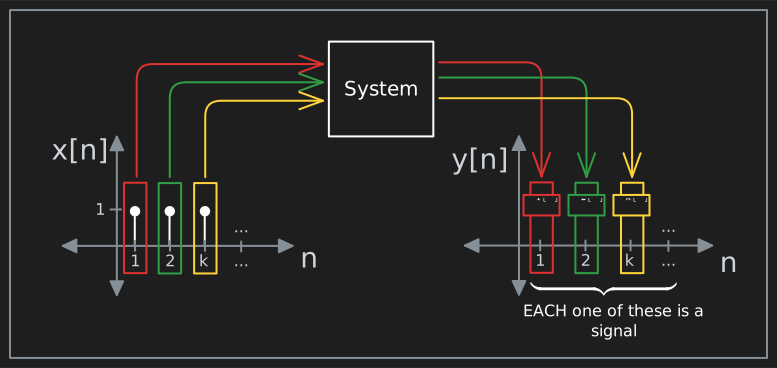
For every point in time (), feed a unit impulse into the system and see how it reacts to it.
Note
The reaction at time is a signal that shows what output the unit impulse triggered across the whole time-domain.
It’s known as the system’s unit impulse response at time , and is denoted by .
This info. is useful because an actual arbitrary input signal will also be a collection of unit impulses scaled by the input at each time ().
For a general linear system, you’ll need to do this for every single point in time (), to rightfully claim that you know how the system reacts across its whole lifespan. However, if the system is also time-invariant, you’ll only need to do this ONCE, since all the impulse responses are basically identical.
Once u acquire the impulse response knowledge, u can compute the system’s output to any arbitrary input signal.
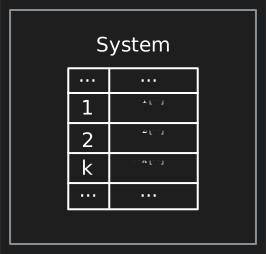
To get the overall system output of an input signal ,
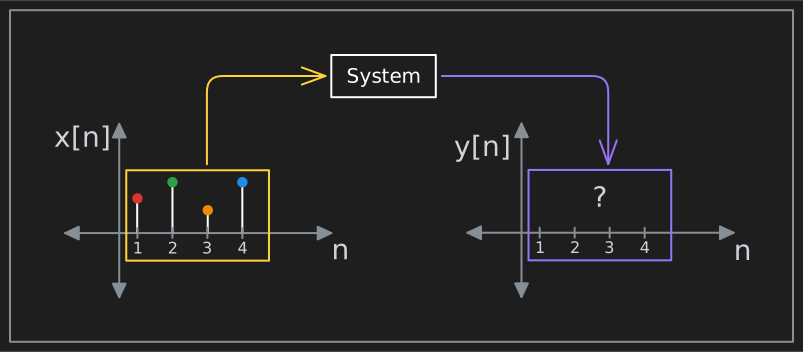
How it works
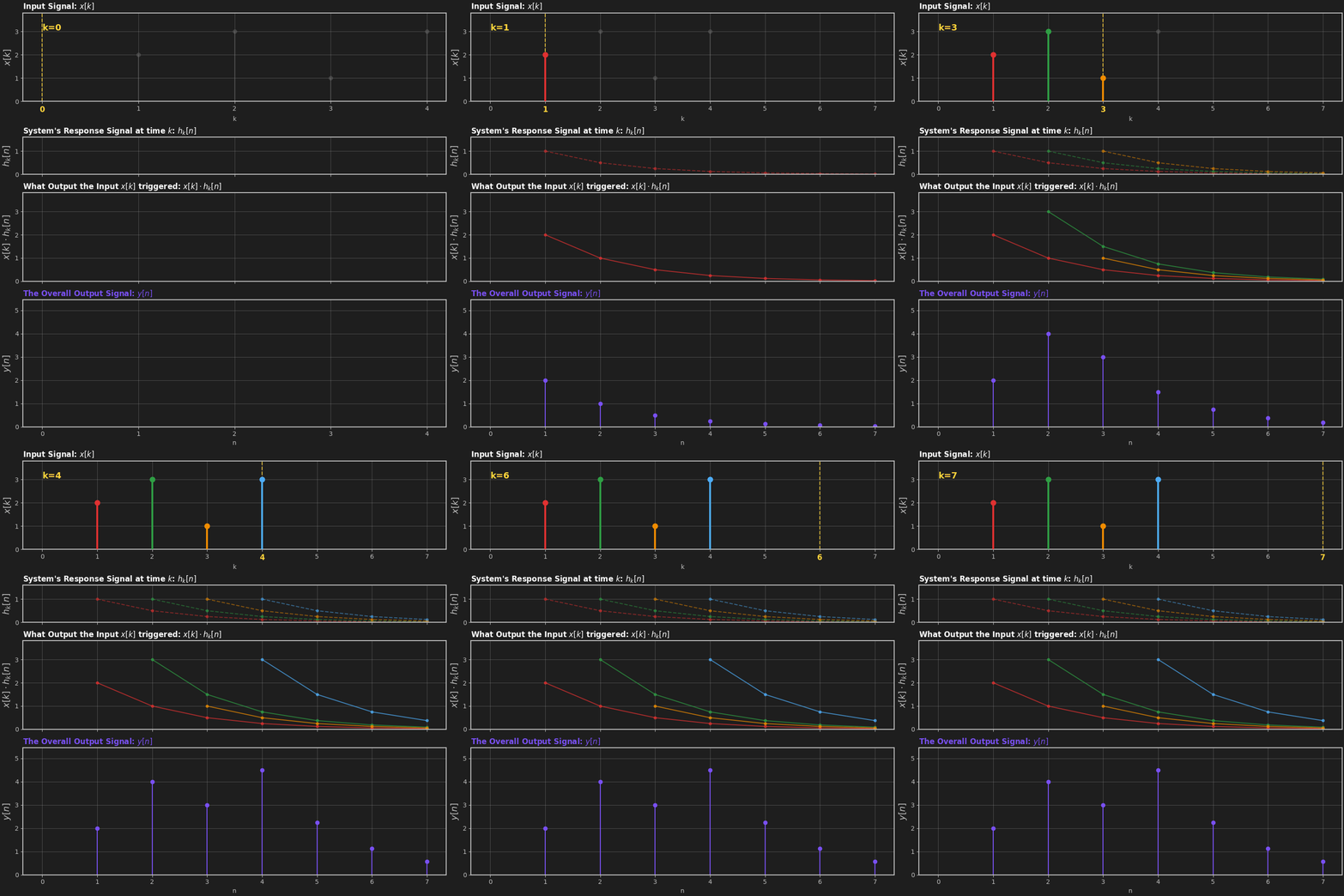
- Iterate through every sample of the input at time .
- grab the system’s unit impulse response at that time . (The reaction signal triggered by the input impulse at time ) =
- Add this reaction to the overall output .
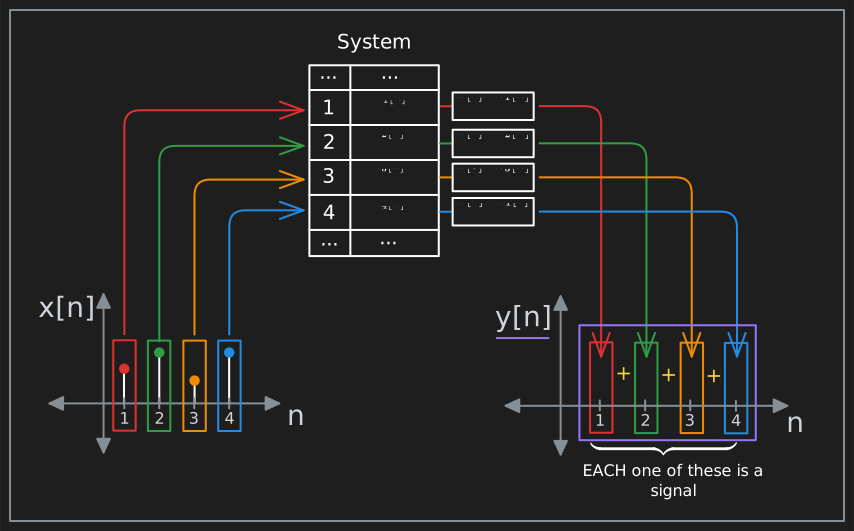
Here’s a GIF illustrating how this works as an input signal gets processed. (Note: In this example, I used the same exponential decay response for every time , implying an LTI system).
Formal Definition
-
(the System is linear)
-
(the System is also time-invariant)
-
TL;DR
An LTI system’s total output is its reaction to each individual input sample, added together.
This output is obtained by computing the convolution sum between its impulse response and input signal.